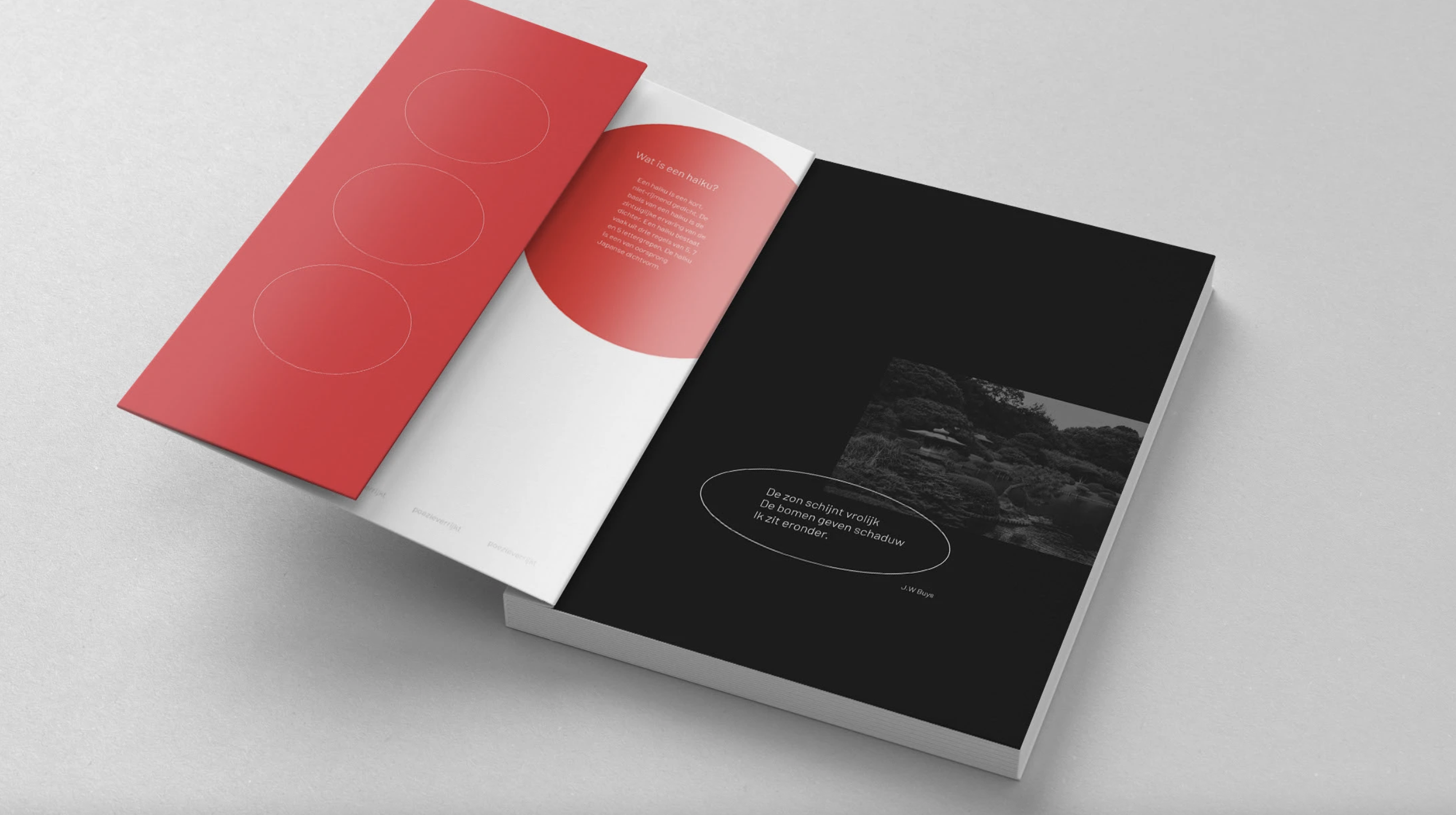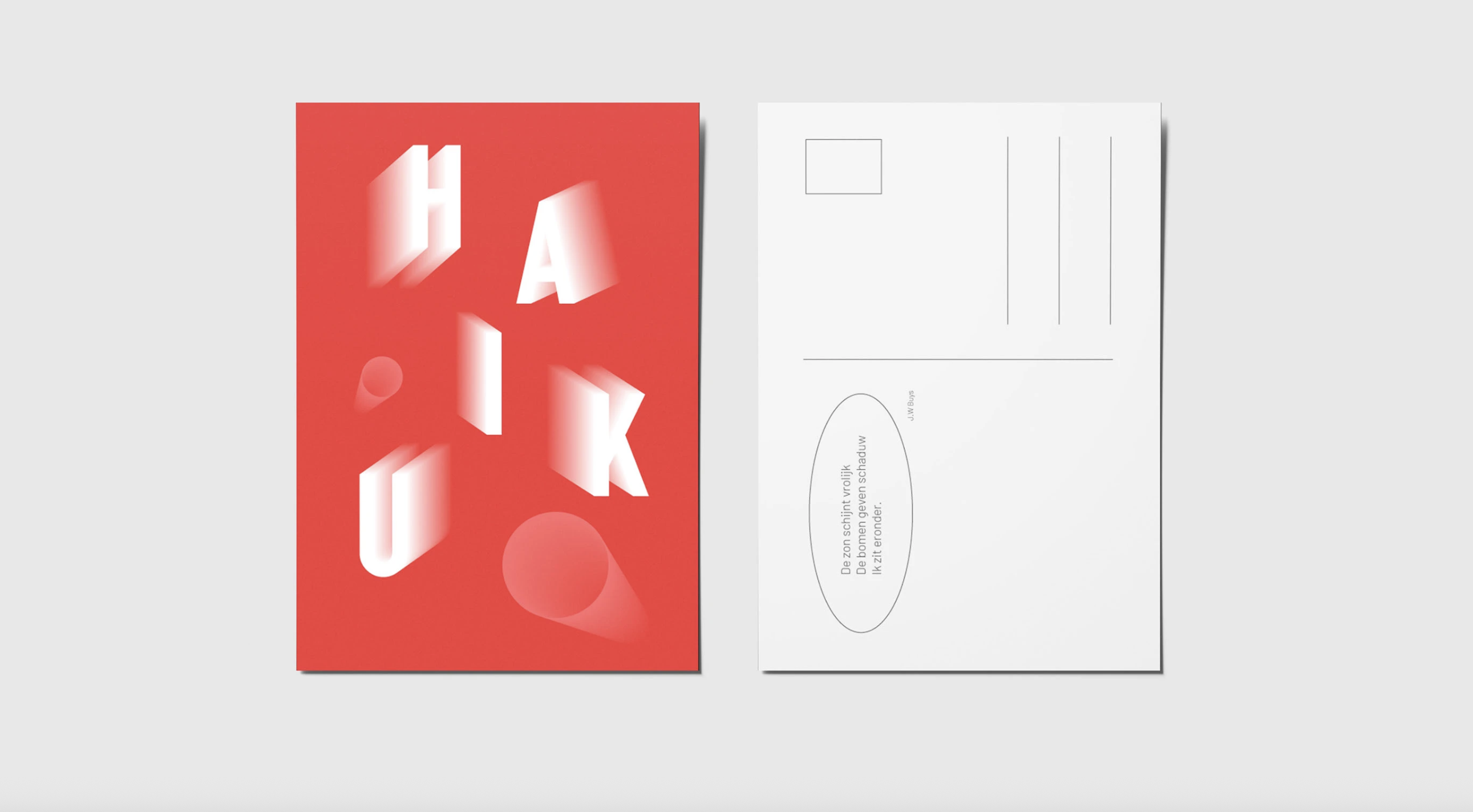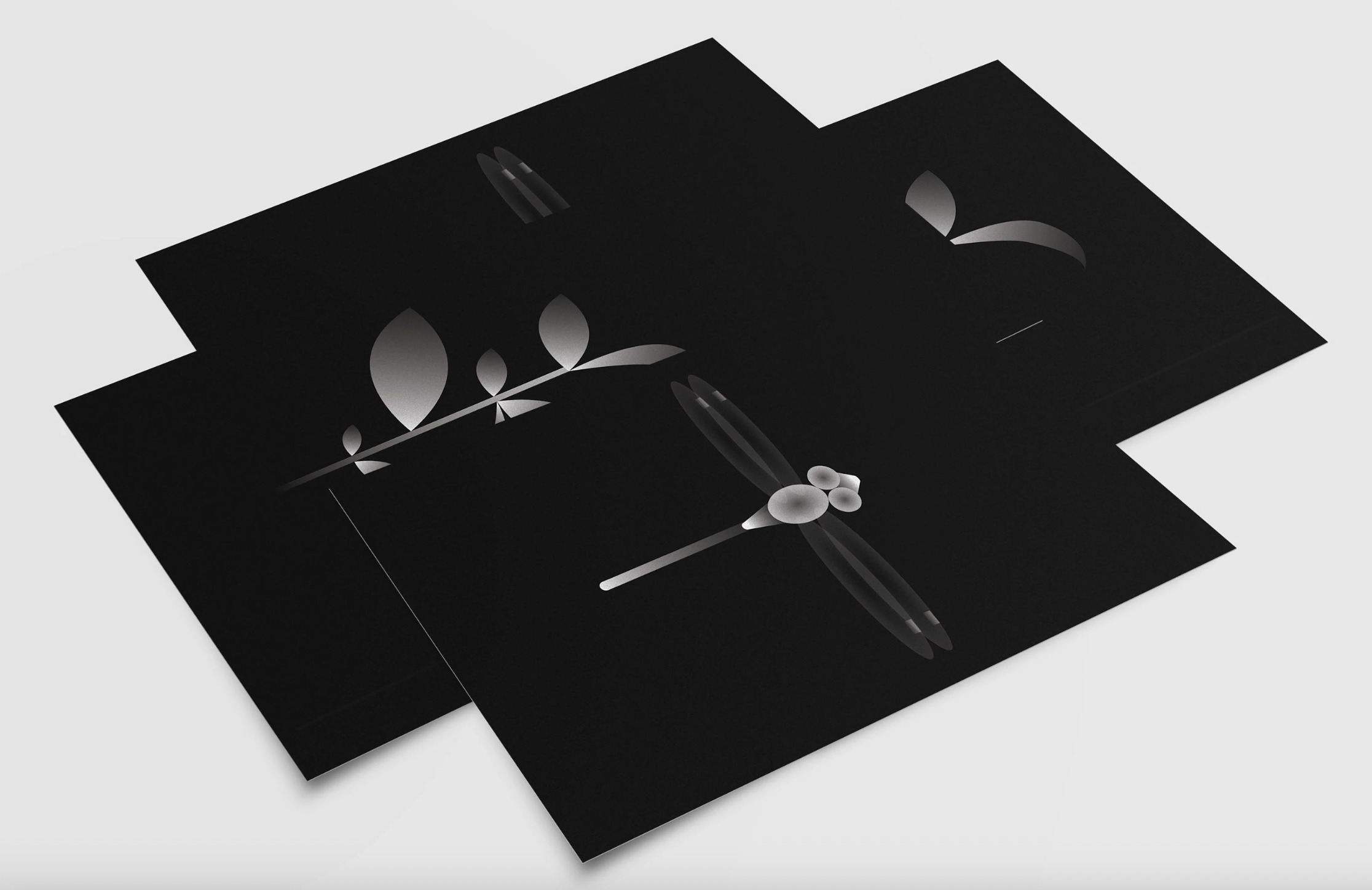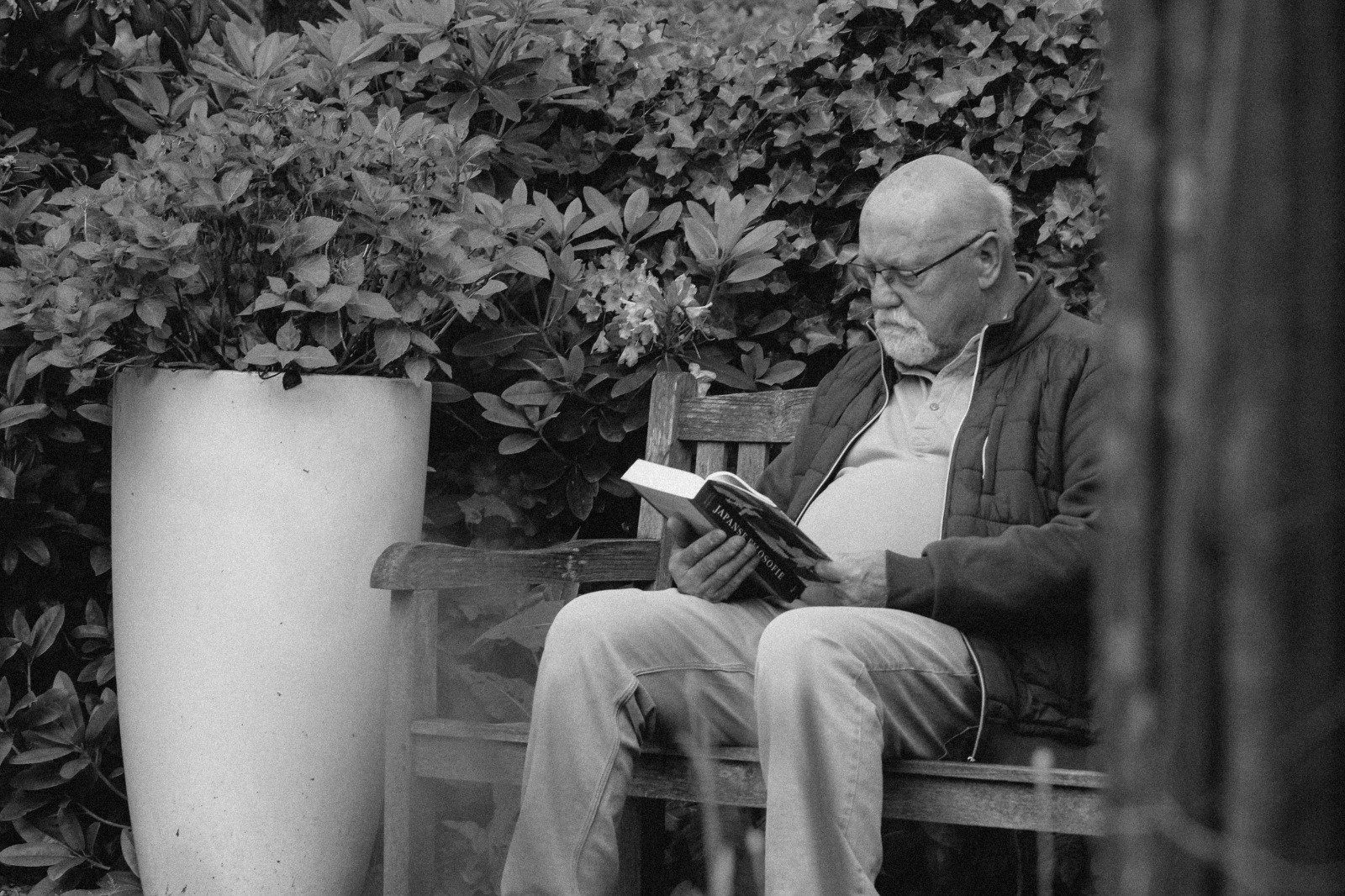
This project developed out of a non-extractive, and community-led practice situated in a small village. This context allows for a form of non-capital exchange where time and resources are not consumed or extracted from one another. Throughout the process, I took on the material realization of the book publishing, design, illustration, photography, and editorial structure while Jan offered me access to his studio space. This created a form of non-capital ecology, a system of exchange based entirely on trust, care, and mutual contribution rather than financial negotiation.
The work prioritizes relation and rhythm over outcome. Developed within the slower pace of village life, the collaboration became a form of counter-productivity, a process that resists the urgency and output-driven logic typical of urban creative work. While translating Jan’s attentive observations, small movements in daily life, moments in nature into visual language, my role functioned less as a dominant creative force and more as a subtle agency, a quiet mediator enabling the text to travel into the public sphere.
Rather than a conventional publication, the project aligns with relational publishing, where the very process of making the book reveals the relationship between collaborators. The accumulation of trust, care, conversations, and shared time forms the core structure of the work. For this reason, the project can only emerge from the specific social fabric of a small community and is best understood as a situated practice, inseparable from its place of origin
Jan’s Haiku captures fleeting moments of everyday life and nature with precision, and I shaped the book’s visual tone and structure in dialogue with this sensibility. The result is not simply a finished object but a quiet record of a shared process, where two different temporalities meet within a single form. In this sense, the work becomes a mode of intergenerational transmission, allowing an elderly poet’s words to be carried forward through the hands of another practitioner
The project operates within a micro-economy of care, where trust-based exchanges of time, skills, and space form the foundation of the creative process. The book, as a small physical artifact, holds the accumulated relation between us and remains as such a micro evidence.
Ultimately, the project explores how a poet’s language and an artist’s images can sustain one another, and how trust within a small community can give rise to an alternative form of publishing. It is a modest attempt to restore the slower rhythms of attention, care, and relation—sensibilities that are becoming scarce in urban life and the structure of this attempt is, in itself, the structure of the work.