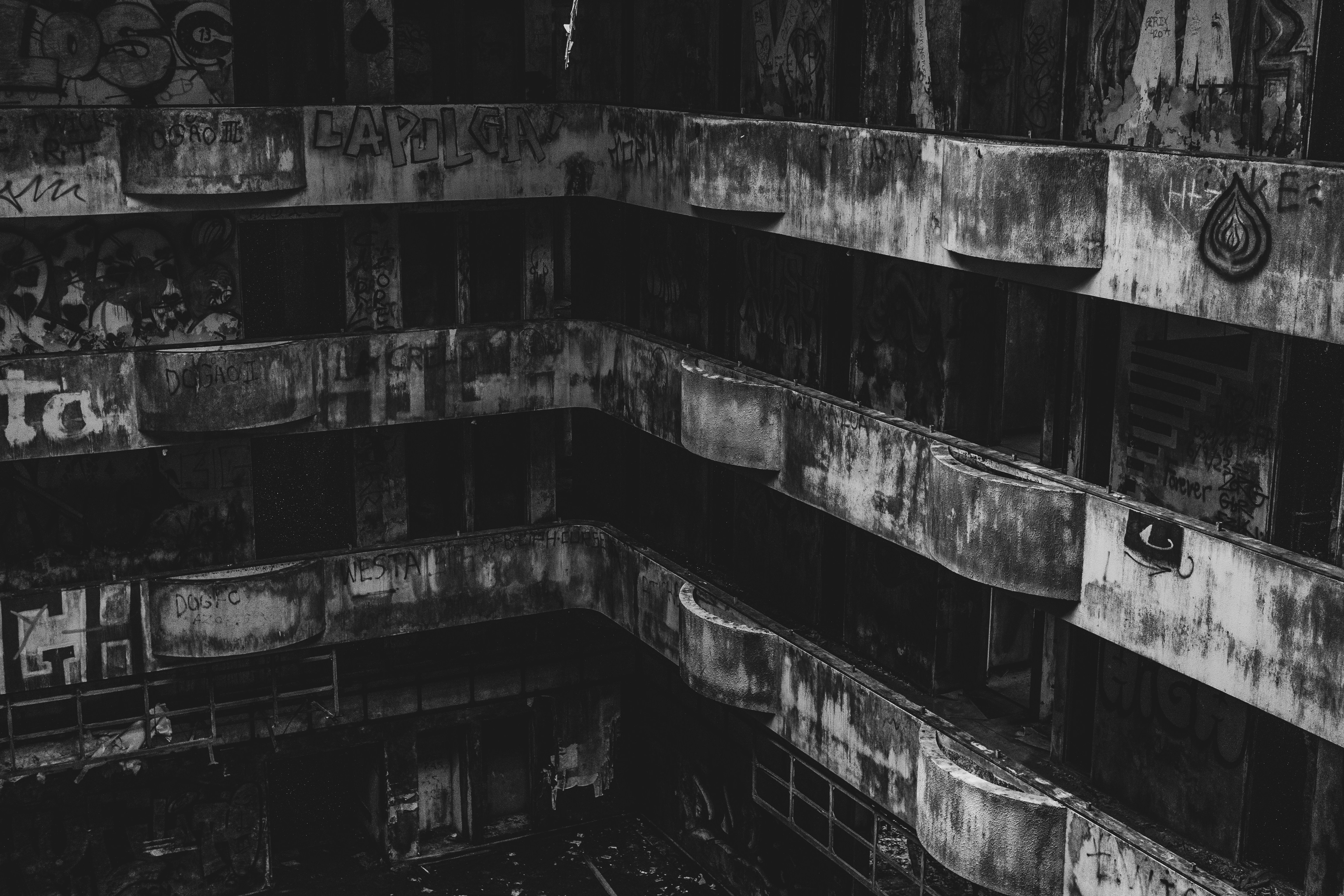
Managing the Apocalypse
Observations and Reflections from Work and Research in an Environmental Non-ProfitAs a child, I saw NGOs as the final safety net against a global system driven by extraction and profit. I saw NGOs as the only mechanism capable of offsetting the environmental and social damage caused by capitalism. However, entering that world after my graduate research, I encountered another kind of extraction site. Much like corporations exploit labor and nature for profit, NGOs function as an extraction infrastructure, processing human 'goodwill' as a raw resource.
What Byung-Chul Han calls the ‘self-exploitation’ of the achievement society in The Burnout Society morphed here into a form of ‘holy gaslighting.’ Under the command to “endure for the greater goal,” the ecological aspirations that once sparkled in the eyes of colleagues were quickly distilled into daily morning panic and insomnia. We were forced to remain silent as our own bodies were eroded in exchange for marketing the suffering of others as data.
I spent an average of 8 hours every day emitting ‘digital carbon’ while supporting campaigns and creating content to save the Earth including flying to have lunch with colleagues for team meetings or team-building activities. Yet, in reality, I have no idea how much decarbonization my efforts actually achieved. It all felt too abstract and bureaucratic. While the organization’s primary mission was to critique environmental pollution and labor exploitation in the steel and fashion industries, its internal structure was a near-perfect replica of the very vertical hierarchy and exploitation it condemned. For someone accustomed to the agile feedback loops of the IT industry, this conservative opacity, combined with rigid structural bottlenecks, created significant cognitive friction. The extraction of resources and the destruction of planetary well-being occurring within the corporate factories and supply chains that this organization critiques were, surprisingly, being reenacted daily right where I stood. Just as corporations dig up the Earth’s resources for profit, the system I was part of mined my biological rhythms and dignity in the name of a ‘cause.’ In the end, the Earth I aimed to protect, the overworked laborers, and even myself wearing down with anxiety each night were all treated as interchangeable fuels, consumed by the same enormous engine of capitalism.
As Marina Otero explored in the 2018 Venice Architecture Biennale exhibition Work, Body, Leisure, modern automated institutions and labor environments transform the individual's body and mind into standardized energy sources under the guise of "salvation." What I witnessed was not the act of saving the planet, but a grotesque metabolism that managed the end efficiently while exploiting the resulting moral debt.
The organization constructed a data infrastructure to condemn the 'vertical pollution' of the steel and fashion industries. Yet, the internal architecture they designed was a precise replication of the hierarchical models they attacked. While demanding high-level ethical protocols such as 'supply chain transparency' and 'ecological accountability' from external systems, the leadership functioned as a closed-circuit interface, lacking the hardware to receive signals or feedback from its own team. This was not merely a failure of communication, but a metabolic dysfunction of the system. The same language used to quantify the carbon emissions of other industries proved incapable of processing the creative research and alternatives proposed by team members, instead categorizing them as 'administrative noise' to be discarded. What was presented as a moral position functioned primarily as an administrative framework, limiting the recognition of others as active agents. Within this infrastructural asphyxiation, the truth became clear: their script for 'planetary salvation' was a simulation sustained only by the extraction and destruction of the human ecology within.
Dignity does not exist if a human cannot defend themselves against the economic hostage of money. I realized that behind the grand name of a non-profit, I had fallen into a state of slavery chained by ‘contracts’ and ‘salaries’ to endure the absurdities of the system. In the end, whether it is a corporation or an NGO, we all live with our breath intercepted within the bureaucratic system of capitalism.
As Sabine Hopfenschwerdt analyzes in Arbeit: Warum unser Glück von ihr abhängt und wie sie uns krank macht, modern work promises self-fulfillment but functions as a contradictory mechanism that makes us ill. Under the pressure to suspend personal dignity for organizational goals, work ceased to be a means of salvation and became the cause of disease. Our resistance to this contradiction crumbled before the secular blade of the ‘contract,’ and voices that once cried for justice were reprogrammed into compliance. The very organization claiming to prevent environmental pollution was, in fact, devastating its internal ‘human ecology’ first.
I refuse to remain a mere victim. Instead, I position myself as a researcher who proved the system's flaws through my own biology. While the figures on Google docs and Slides decorated the concept of 'sustainability,' my anxiety and insomnia functioned as the most honest sensors, warning of how far those metrics had drifted from reality.
However, stopping this cycle required immense courage. We still live under the gravity of capitalism; I am a physical being who must pay rent and buy food every month. Every time I tried to break the 'chain of extraction' to protect my dignity, the very real fear of survival held me back.
Ultimately, the question was where to find the point of balance. The gap between 'vertical exploitation,' which destroys the self to accumulate capital, and 'horizontal circulation,' which maintains autonomy while securing basic survival. I chose to relocate myself as an artist to find that equilibrium. Rather than being consumed as an anonymous worker within the vast bureaucracy of capitalism, I decided to explore a way of life that recognizes the clear limits of my own breath.
I now discard the language of those who manage the end and move into the realm of the most horizontal and honest cycle of survival: the ‘Breath of the Haenyeo.’ Unlike the infinite extraction of capitalism, the muljil of the Haenyeo is an ‘embodied ecology’ that coexists with nature by taking only what one’s lungs can allow. It is labor to pay the rent, yet it is a dignified technology of survival that does not exploit nature. Leaving the office where the vertical hierarchy compressed, I learn the wisdom of the sea, taking only what I can breathe and returning the rest. This exit was a necessary beginning to reclaim damaged dignity and discover the 'minimum rhythm of breathing' for coexistence in a capitalist society.
References & Research Notes
Otero Verzier, Marina, ed. Work, Body, Leisure. Rotterdam: Het Nieuwe Instituut, 2018.
Han, Byung-Chul. The Burnout Society. Translated by Erik Butler. Stanford: Stanford Briefs, 2015. Hopfenschwerdt, Sabine. Arbeit: Warum unser Glück von ihr abhängt und wie sie uns krank macht. Vienna: Brandstätter Verlag, 2021.